
Orionid Meteor Shower in Qatar 2026: Best Time and Places to Watch Tonight
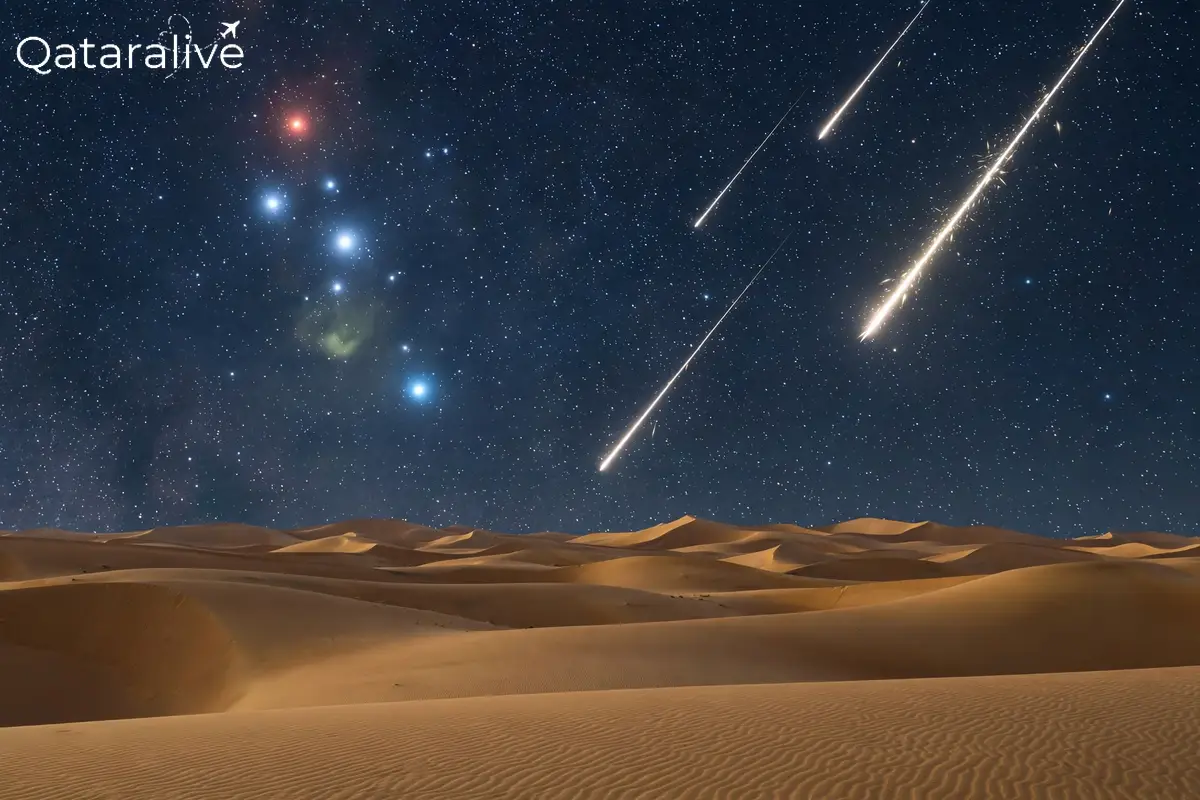
The Orionid meteor shower peaks over Qatar tonight, Wednesday 21 October, and the honest advice this year is simple: skip the evening and set an alarm instead. A bright waxing gibbous Moon washes out the sky for most of the night, so the real show starts after moonset.
From about 1:45 AM until dawn, the sky over Qatar turns properly dark. Under a dark desert sky you could see 10 to 20 fast, bright meteors an hour, each one a tiny piece of Halley’s Comet burning up overhead.
Quick Reference: Tonight at a Glance
Why Tonight Is Different: The Moon Problem
This year’s Orionid peak lands under a waxing gibbous Moon that is about 86% lit. The Moon rises in the afternoon and stays up past midnight, and its glare hides all but the brightest meteors.
That is why most “watch after midnight” advice will disappoint tonight. While the Moon is up, you might catch a bright fireball or two, but the fainter streaks are lost in the glow.
Once the Moon sets at 1:42 AM, everything changes. Orion stands high in the eastern sky, the radiant is near its best, and the remaining hours until dawn twilight are the darkest of the whole night.
The window, hour by hour
From 1:42 AM to about 4:20 AM, Doha has true dark sky with no moonlight at all. Astronomical twilight begins at 4:18 AM, and sunrise is at 5:35 AM, so plan to finish by about 5:00 AM at the latest.
If you can only manage one hour outside, make it 3:00 to 4:00 AM. By then your eyes are adapted, Orion is high, and the shower is at its strongest.
What Are the Orionids?
The Orionids are dust and grit shed by Halley’s Comet, the most famous comet in history. Together they form the Orionid meteor shower that Earth meets every October, when our planet passes through that debris stream and the grains slam into the atmosphere at about 66 kilometres per second.
That speed makes Orionids some of the fastest meteors of the year. Many leave glowing trails that hang in the sky for a second or two after the streak itself has gone.
The shower is active from 2 October to 7 November, with the peak on the night of 21 to 22 October. Qatar Calendar House has announced that the Orionids will be visible over Qatar, peaking on the night of 21 October.
Where to Watch in Qatar
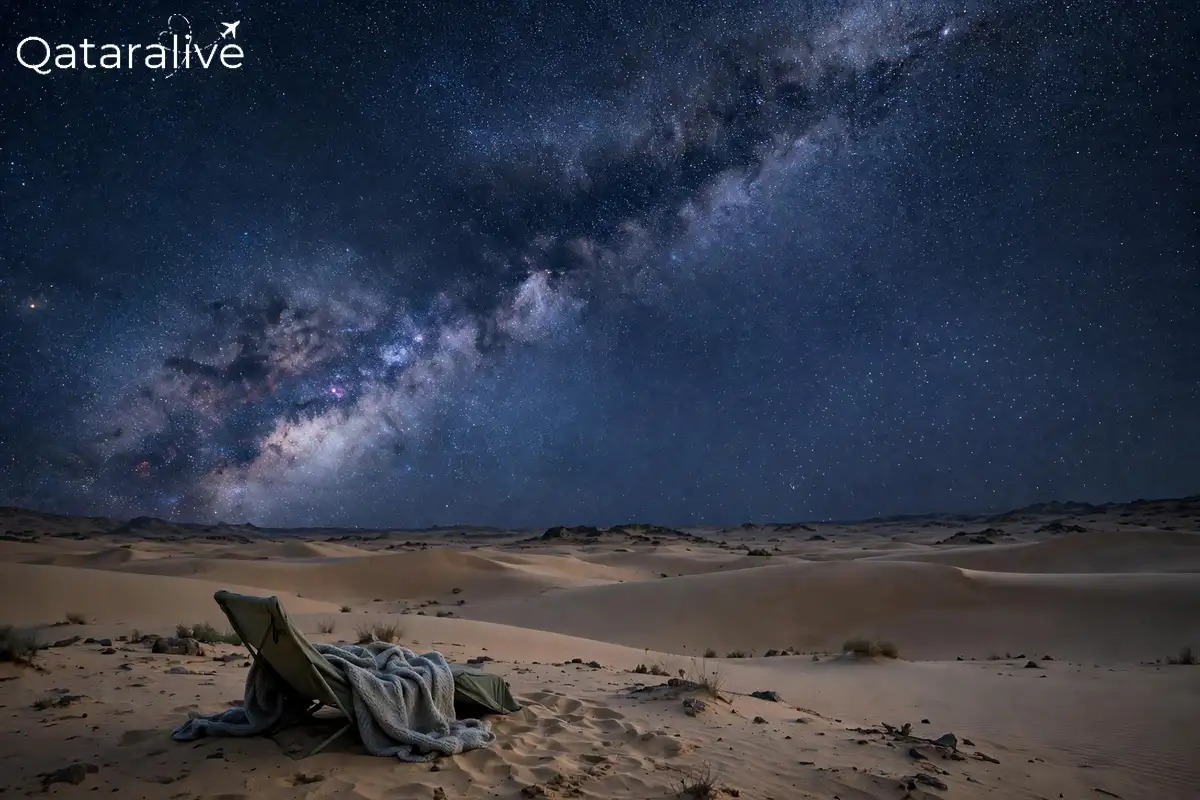
[IMAGE: qatar-desert-stargazing-night.webp | Alt: Dark desert sky in Qatar with the Milky Way, ideal for watching the Orionid meteor shower – QatarAlive]
Dark desert spots
Light pollution is the enemy, so distance from city lights matters more than anything else. The desert around Zekreet and the inland roads west of Doha give some of the darkest skies within an easy drive.
The Singing Sand Dunes and the open areas near Sealine also work well. Park safely off the road, switch off every light you can, and face east.
Closer options near Doha
If a desert trip is too much on a work night, head for open ground away from streetlights, such as the quieter edges of Aspire Park or the far end of the Corniche. Even there, wait for the post-moonset window, because city glow plus moonlight is a losing combination.
Wherever you go, give your eyes a full 20 minutes without phone screens or torches. Your night vision improves a lot in that time, and faint meteors start to appear.
How to Watch: Simple Tips That Work
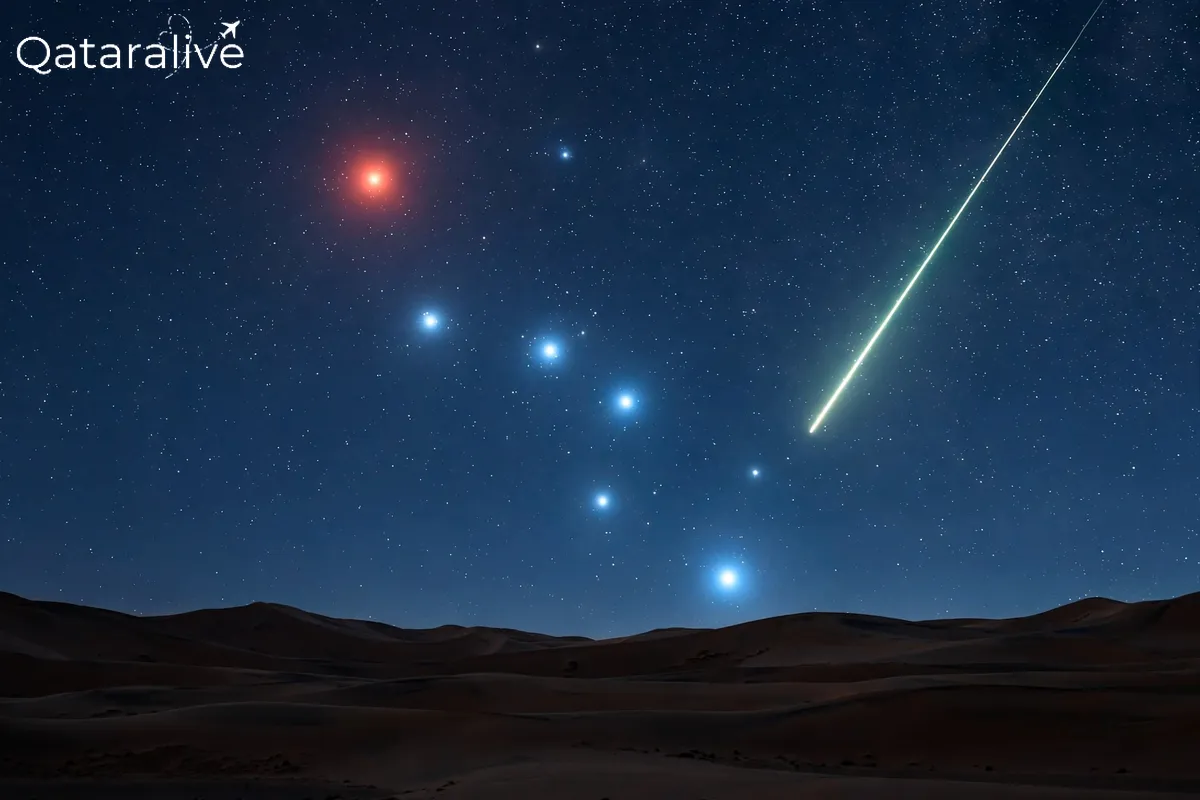
[IMAGE: orion-constellation-eastern-sky.webp | Alt: The Orion constellation rising in the eastern night sky over Qatar – QatarAlive]
Look away from Orion, not at it
The meteors appear to radiate from a point near the star Betelgeuse in Orion, in the eastern sky. Counterintuitively, the longest and most dramatic streaks show up 45 to 90 degrees away from that point.
So lie back, take in a wide stretch of sky, and let the meteors come to you. Staring at one small patch is the fastest way to miss them.
No telescope, no binoculars
Meteors cross the sky in under a second and can appear anywhere. Magnification only shrinks your view, so your naked eyes are genuinely the best equipment for this.
Bring a reclining chair or a blanket, warm layers for the desert chill before dawn, and water. A red-light torch helps you move around without ruining your night vision.
Set your expectations honestly
From a dark desert site in the post-moonset window, 10 to 20 meteors an hour is a fair expectation tonight. From inside Doha, expect fewer, but the brightest Orionids still punch through city glow.
What If You Miss Tonight?
The shower stays active until 7 November, and the nights right after the peak still produce meteors. The catch is that the Moon grows brighter each night and sets later, reaching full Moon on 26 October.
That makes tonight’s post-moonset window the best remaining chance of this year’s Orionids. If clouds or sleep win tonight, try the same after-moonset trick on the next clear night this week.
For more Qatar sky events, read our guide to the lunar eclipse in Qatar and our night under the stars at 974 Beach.
For the official meteor shower calendar and yearly activity forecasts, see the International Meteor Organization, which tracks the Orionids and every other major shower.