High-Speed Railway Between Qatar & Saudi Arabia | Announced
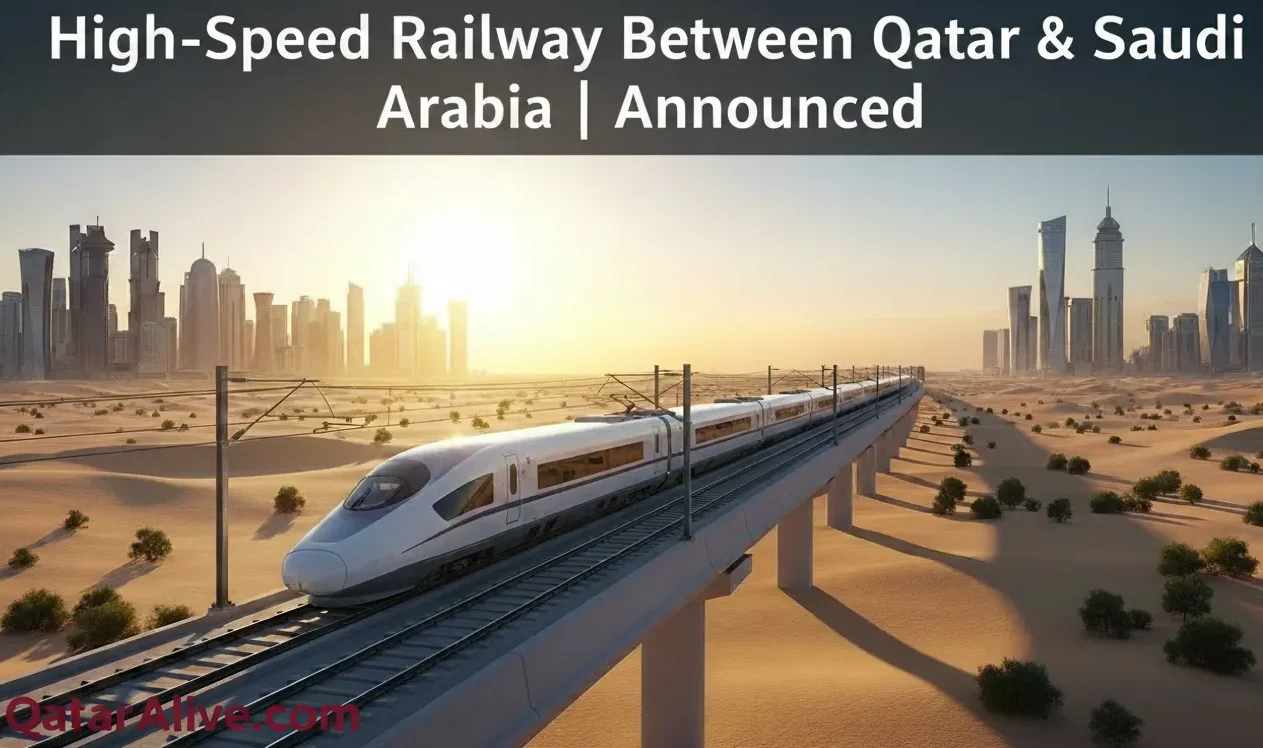
A new high-speed electric rail line will soon link Doha and Riyadh in around two hours, dramatically changing how people move between Qatar and Saudi Arabia.
In this guide, you will find all the high-speed railway between Qatar and Saudi Arabia details currently confirmed by official announcements, along with practical context on what it could mean for travel, business, and tourism in the region. The project is still in the planning and early implementation stage, so some aspects remain indicative rather than final.
As per updates initial operations by June 2026. This “fast-track” phase would focus on establishing the direct link between Riyadh and Doha to support immediate tourism and business travel demand. More details below.
Project High-Speed Railway | Overview
How the route will work
Main alignment between Doha and Riyadh
The high-speed railway line will start in Doha and end in Riyadh, forming a direct land corridor between the Qatari and Saudi capitals. The tracks will cross the land border area around the existing Abu Samra and Salwa crossing, which already handles road traffic between the two countries.
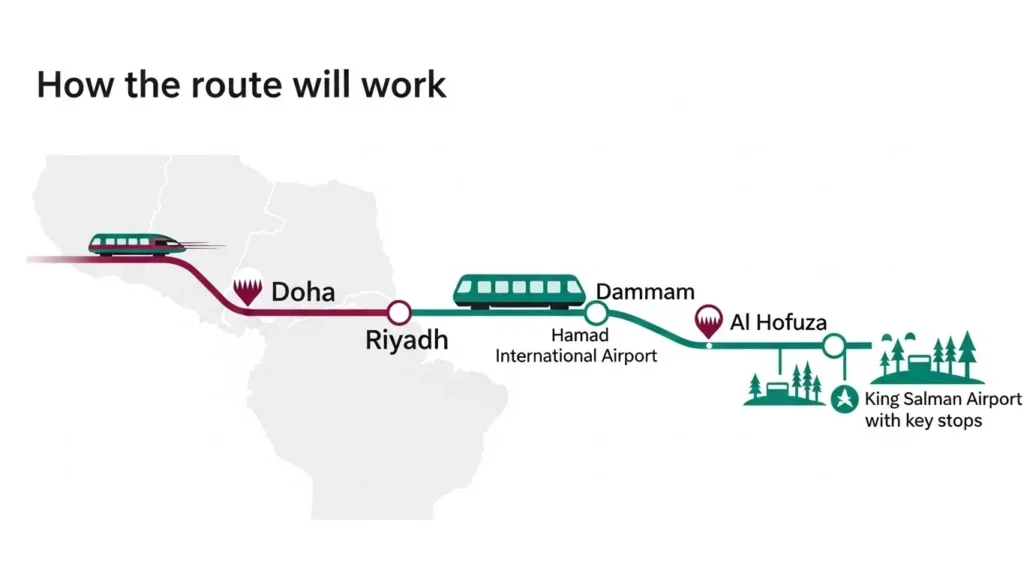
On the Saudi side, the line will pass through Al Hofuf in the Al Ahsa region and the city of Dammam on the Gulf coast. These stops will allow passengers from the Eastern Province to board or disembark without needing to travel first to Riyadh.
On the Qatari side, the line will link into Doha’s metropolitan area, enabling connections with the Doha Metro and other local transport services. This should make it possible to move from inner Doha to major Saudi cities with only one or two simple transfers.
Connecting the two main airports
A defining feature of the project is the integration of both countries’ future flagship airports. The line is planned to connect Hamad International Airport in Doha with King Salman International Airport in Riyadh through dedicated stations or direct rail access.
This will give passengers an additional option beyond flying, especially for those who want predictable ground travel times or who are combining business meetings in both capitals. It will also support air-rail intermodal trips, such as arriving by air in Doha and continuing by train to Dammam or Riyadh.
Links to the wider GCC railway vision
The Qatar-Saudi high-speed rail is also intended to become part of a broader Gulf Cooperation Council rail network. Official statements describe the project as a key connector supporting integration among GCC states through a modern railway system.
As other regional projects mature, this line could form one leg of a longer north-south or east-west rail corridor across the Arabian Peninsula. For passengers, that would gradually expand direct rail access to more cities in Saudi Arabia and potentially beyond.
Timeline and construction phases
Update: Saudi Cabinet Official Approval (Dec 23) Following the initial signing, the Saudi Council of Ministers formally approved the high-speed railway project on December 23, 2025. The Cabinet, chaired by the Custodian of the Two Holy Mosques, classified the railway as a critical infrastructure priority that will drive Gulf integration.
New Launch Target: June 2026? While the full infrastructure is slated for completion within six years, new reports from December 25, 2025, indicate an ambitious target to begin initial operations by June 2026. This “fast-track” phase would focus on establishing the direct link between Riyadh and Doha to support immediate tourism and business travel demand.
Key milestones so far
At the time of writing, authorities have indicated that the project is expected to take around six years to complete from the start of implementation.
This points toward a target operational window around the early 2030s, assuming design, procurement, and construction proceed as scheduled.
Expected project phases
Although detailed engineering schedules have not yet been published, a typical timeline for a high-speed line of this scale would include:
Until official project agencies publish a detailed schedule, all month-by-month timelines remain indicative and subject to adjustment.
Technology and train operations
High-speed electric technology
The line is planned as a high-speed electric passenger railway with design speeds above 300 kilometers per hou
Electric traction will significantly reduce direct carbon emissions compared with diesel locomotives. When paired with low-carbon electricity supply, this type of system can drive substantial reductions in per-passenger emissions compared with short-haul flights or single-occupancy car trips on the Doha-Riyadh corridor.
Signaling, safety, and digital systems
Although specific technologies are not yet officially named, modern high-speed lines typically use advanced automatic train protection and centralized traffic control. This allows:
- Shorter headways between trains without compromising safety.
- Continuous monitoring of speed and braking performance.
- Real-time adjustment of timetables to handle disruptions.
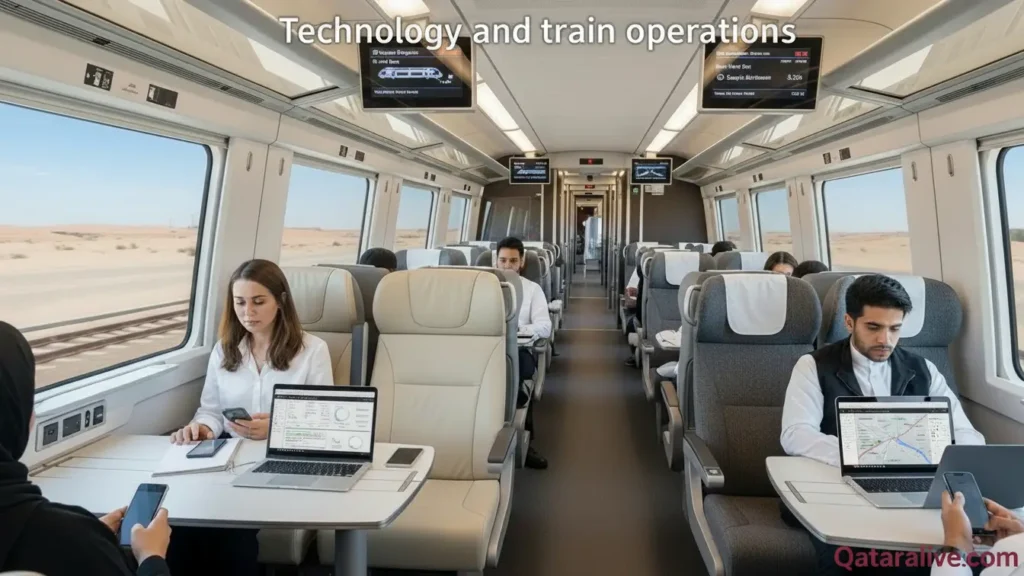
Saudi Arabia has already been moving toward more advanced communications for its railways, including partnerships to introduce 5G-based solutions for operations and passenger connectivity. It is therefore reasonable to expect strong onboard connectivity and modern passenger information systems on the Qatar-Saudi route, though final specifications are still to be confirmed.
Service patterns and frequency
Official releases focus on capacity and journey time rather than detailed timetables, but some likely patterns can be inferred:
Exact frequencies, first and last train times, and seasonal adjustments will be announced closer to opening, once demand studies and operating models are finalized.
Economic and social benefits
Trade, tourism, and labor mobility
The line will create a fast, predictable link between two of the Gulf’s most important economic centers. Official figures project that it will serve more than 10 million passengers per year, supporting business travel, tourism, and day-to-day commuting for cross-border workers.
Shorter and more reliable travel times can:
Jobs and GDP impact
Authorities in both countries estimate that the project will create more than 30,000 direct and indirect jobs across construction, operations, maintenance, and associated services.
They also expect the railway to contribute around 115 billion riyals to the combined GDP of Qatar and Saudi Arabia over time. This impact will arise not only from the construction phase but also from the long-term productivity gains that come with better connectivity.
Environmental sustainability
Because the line uses electric trains, it supports national goals to reduce carbon emissions from transport. Combined with existing metro and tram networks in Doha and ongoing rail expansion in Saudi Arabia, the project fits within a shift toward more sustainable public transport in the Gulf.
Replacing some short-haul flights and long car journeys between Doha and Riyadh with high-speed rail travel will lower emissions per passenger, particularly as energy mixes in both countries evolve over the coming decade.
What this means for travelers
How a future Doha-Riyadh trip could look
Once the line opens, a typical passenger journey might follow these steps:
Expected ticketing and prices
No official fare table has been released yet. However, several elements are likely:
When authorities release initial fare guidance, it will likely be positioned to compete with air travel on price, time, and comfort while recognizing the premium nature of high-speed service.
Onboard comfort and classes
While detailed interior designs are not yet public, high-speed trains of this type usually offer:
As designs are finalized, more exact information on seat layout, luggage limits, and amenities will become available.
Current options until the line opens
Because the high-speed rail will not be operational for several years, travelers must continue using existing modes between Qatar and Saudi Arabia.
Air travel
At present, direct flights between Doha and Riyadh typically take around 90 minutes of flying time. When airport procedures and transfers are included, total door-to-door journeys are longer, but air remains the fastest existing option.
Doha also has direct flights to Dammam and other Saudi cities, which will continue to complement rail once the high-speed line opens.
Road travel
Driving between Doha and Riyadh via the Abu Samra and Salwa border crossing is possible today. Depending on exact route, traffic, and stops, the road journey often takes between five and seven hours or more.
Coach and bus services also operate on certain routes, providing a lower-cost but longer-duration alternative to flying.
Multimodal combinations
Even after the high-speed railway opens, many travelers will likely combine modes. For example, someone might fly into Riyadh for a long-haul connection, then use high-speed rail to reach Doha, or the reverse.
Role in national and regional strategies
Saudi Vision 2030 and the National Transport and Logistics Strategy
Saudi Arabia views rail expansion as a core part of Saudi Vision 2030 and its transport strategy, which aims to position the Kingdom as a major logistics hub and reduce dependence on oil revenues. New passenger and freight lines across the country are being planned or upgraded, with high-speed rail as a visible flagship element.
The Riyadh-Doha line fits into this context by:
Qatar National Vision 2030 and sustainable mobility
Qatar has invested heavily in the Doha Metro, Lusail Tram, and related projects in preparation for long-term growth and major events. The high-speed link to Saudi Arabia extends this public transport ecosystem beyond national borders.
By connecting Hamad International Airport and Doha’s urban rail with a regional high-speed network, the project supports:
Conclusion
The high-speed railway between Qatar and Saudi Arabia details currently available paint a picture of a transformative cross border project that will reshape travel in the Gulf. Once complete, it will connect Doha and Riyadh in about two hours, serve over 10 million passengers annually, and support broader GCC rail integration and economic growth.
For now, travelers should treat the announced six year timeline as an indicative target and continue to rely on air and road options while the line is designed and built. As more technical, operational, and passenger focused information is released, this guide will help you interpret those updates and understand how the high-speed railway between Qatar and Saudi Arabia details will affect your future trips, investments, or business plans in the region.